
Most product failures don’t start with bad code or poor execution. They start much earlier, in conversations that feel reasonable at the time.
A roadmap review runs long. Pressure builds. Someone says, “Let’s just build an MVP and learn from users.” Heads nod. The decision feels pragmatic, even responsible.
Weeks later, the product is live. Demos look fine. Early conversations sound encouraging. But usage never settles. Engineering starts firefighting. Sales can’t quite explain who this is for. Leadership keeps asking the same question in different ways.
What actually went wrong?
Almost always, it traces back to a misunderstanding that refuses to die:
What’s the difference between MVP and prototype? When should teams build an MVP?
Most teams think they know. Many still pay for it.
Why This Confusion Keeps Repeating
The MVP vs prototype problem isn’t about definitions. It’s about intent under pressure.
Founders feel urgency to show progress.
Product leaders feel responsible for direction.
Tech leaders feel the weight of long-term decisions being made too early.
Under that pressure, learning and validation start to blur. Teams ship something before they’re clear on what they’re trying to prove. Calling it an MVP gives the illusion of discipline, even when the underlying question is still fuzzy.
That’s how well-run teams drift into fragile systems without noticing.
MVP vs Prototype - What's the Difference, Really?
A prototype exists to help teams think clearly.
An MVP exists to force teams to confront reality.
That distinction matters more than most frameworks admit.
When a team builds a prototype, they’re exploring understanding. They want to know whether users grasp the idea, whether the flow feels intuitive, whether the problem resonates at all. The output isn’t adoption or revenue. It’s insight. Because of that, prototypes can cheat. They can stub logic, skip edge cases, and fake integrations. Nobody expects durability.
An MVP changes the contract the moment it meets real users.
Once something is live, expectations harden. Users stop being generous. They don’t care what stage the product is in. They care whether it earns space in their workflow, whether it saves time, whether it works reliably enough to trust.
Treating a prototype like an MVP creates confidence without consequence. Teams feel validated before they’ve actually learned anything that holds up outside a demo.
That gap is where future problems are quietly born.
What Actually Breaks When Teams Choose Wrong
The damage doesn’t arrive all at once. It spreads through the system.
Metrics Drift First
Prototype feedback is conversational. MVP feedback is behavioural.
When teams confuse the two, they start treating opinions as evidence. Users say things like “This looks useful” or “I’d try this,” and the team hears validation. But behaviour tells a colder story. Users don’t return. Core workflows don’t stick. There’s curiosity, but no pull.
By the time this becomes obvious in dashboards, momentum has already thinned out.
Engineering Feels It Next
Tech leaders usually sense the problem before it’s named.
An MVP built with a prototype mindset feels unstable. Not because it’s early, but because it was never designed to carry weight. Edge cases pile up. Shortcuts harden into constraints. Teams spend more time stabilising than extending.
Velocity drops, not because engineers lack skill, but because they don’t trust the foundation they’re standing on.
That’s rarely a tooling issue. It’s a sequencing issue.
Go-To-Market Loses Its Backbone
Sales struggles to articulate who the product is really for. Marketing experiments with multiple narratives because none feel true enough to anchor. Support fields questions that reveal gaps nobody planned for.
This isn’t a messaging failure. It’s a product clarity failure.
Prototypes explore possibilities. MVPs require commitment to one clear path. When teams skip that transition, everything downstream starts improvising.
When Should Teams Build an MVP?
This is where advice usually turns vague. It shouldn’t.
Teams should only build an MVP when they’re ready to test value under real conditions, not ideas in isolation.
That moment arrives when the problem is clearly painful, the user is clearly defined, and one core job matters more than everything else. It also requires the discipline to say no—to features, edge cases, and “we might need this later” thinking.
If any of those conditions feel uncomfortable, that discomfort is useful. It usually means the product question hasn’t settled yet.
An MVP demands commitment. Exploration belongs earlier.
When an MVP Is Actually the Wrong Move
Some teams rush into MVPs because momentum feels like progress.
If personas are still debated, if every stakeholder sees a different use case, or if the roadmap keeps expanding to accommodate internal opinions, an MVP will only amplify confusion. Shipping doesn’t create clarity. It exposes the lack of it.
In those moments, a prototype isn’t hesitation. It’s restraint. It gives the team space to learn without pretending certainty exists.
Strong teams know when not to ship.
Prototype First, MVP Second: How Mature Teams Sequence Work
High-performing product organisations rarely argue MVP versus prototype. They sequence deliberately.
A prototype answers a simple question: do users understand this well enough to engage without explanation? If the answer is no, building an MVP just accelerates failure.
Once understanding is clear, the mindset shifts. The MVP is no longer about learning broadly. It’s about proving something narrow but essential—repeat usage, reliance, or willingness to change behaviour.
That shift from curiosity to commitment is where many teams stumble.
A Quiet SaaS Failure That Looked Like Progress
A B2B SaaS team once shipped what they proudly called a “lean MVP.”
The interface was clean. The idea landed well in demos. Early customers signed on. Everything looked healthy from the outside.
Usage dropped sharply within weeks.
The problem wasn’t bugs or performance. It was depth. Workflows were thin. Onboarding assumed too much context. The product never became important enough to earn a habit.
What they shipped behaved like a polished prototype, not a system meant to live inside someone’s day.
Speed wasn’t the issue. Shallow value was.
The Myths That Keep Teams Making the Same Mistake
One persistent belief is that MVPs should be ugly. Rough edges are fine. Broken experiences are not. Users forgive simplicity. They don’t forgive friction that wastes time.
Another belief is that teams can fix things after launch. Early users shape perception faster than any campaign ever will. If the first experience feels careless, trust erodes quietly and permanently.
Constraints create focus. Neglect creates churn.
The Data Doesn’t Disagree
According to CB Insights, the most common reason startups fail is building something nobody actually needs.
That outcome rarely comes from laziness. It comes from teams mistaking early interest for real demand, and prototype signals for MVP proof.
The failure isn’t effort. It’s intent.
Why AI Products Make This Trade-Off Even Sharper
AI products compress patience.
If outputs feel unreliable, if answers drift, or if trust breaks early, users leave faster than they arrived. There’s very little tolerance for “it’s early” when intelligence is the promise.
That’s why many product leaders are rethinking not just what they build for AI MVPs, but how those systems learn and stay grounded.
RAG Systems and the New Shape of AI MVPs
RAG plays a key role in building trustworthy AI systems that users can rely on from day one. Many AI MVPs fail because models rely too heavily on memory. Knowledge goes stale. Hallucinations creep in. Feedback loops weaken.
RAG (Retrieval-Augmented Generation) systems change that by grounding responses in real, verifiable data. They introduce structure where experimentation often runs loose.
If you’re building AI-driven products, this matters earlier than most teams expect.
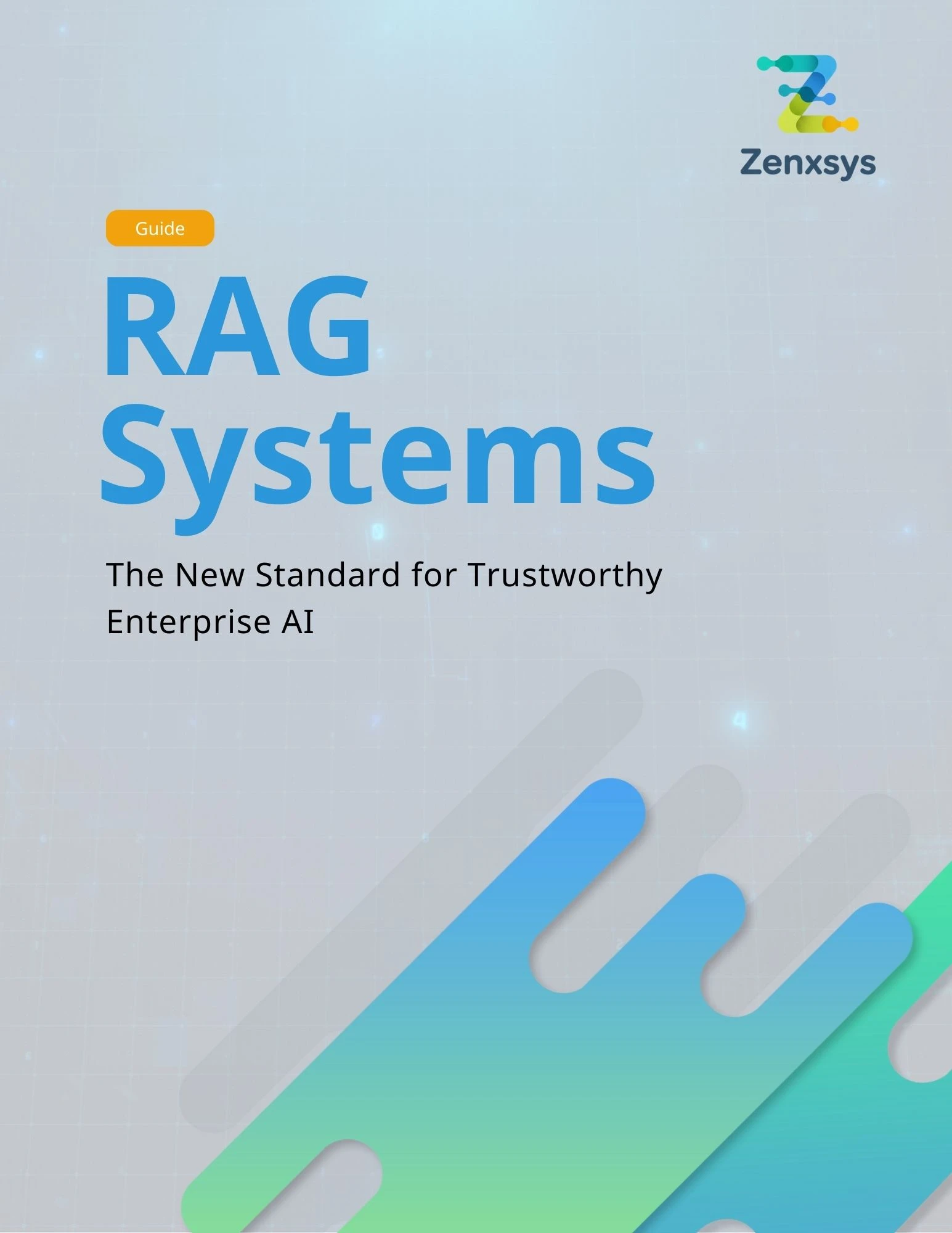
👉 Download the guide: RAG Systems – The New Standard for Trustworthy AI
It breaks down how teams design AI MVPs that stay accurate, auditable, and trusted from the start.
RAG Systems - The New Standard for Trustworthy AI
If you’re building RAG systems for real teams, this part matters.
We’ve put together a practical guide that goes deeper into:
- Common RAG failure patterns
- Architectural guardrails
- Production-ready design decisions
- How to scale without losing trust
This isn’t theory. It’s built for teams who want RAG systems that hold up under real usage.
Takeaway: Strong RAG starts with the right blueprint.
A Simple Check Before You Commit to an MVP
Before shipping anything you’re calling an MVP, ask yourself:
Are we testing curiosity, or are we testing commitment?
Do we know who feels this pain most acutely?
Would we personally rely on this next week?
If those answers feel fuzzy, shipping won’t sharpen them. It will only make the gaps more expensive.
Final Thought
Prototypes help teams think.
MVPs force teams to face reality.
Both are essential. Confusing them is costly.
The teams that scale aren’t the ones that move fastest. They’re the ones that understand when learning ends and commitment begins—and design their systems accordingly.