
Cybersecurity · Supported
NIST CSF 2.0
NIST Cybersecurity Framework 2.0
NIST CSF 2.0
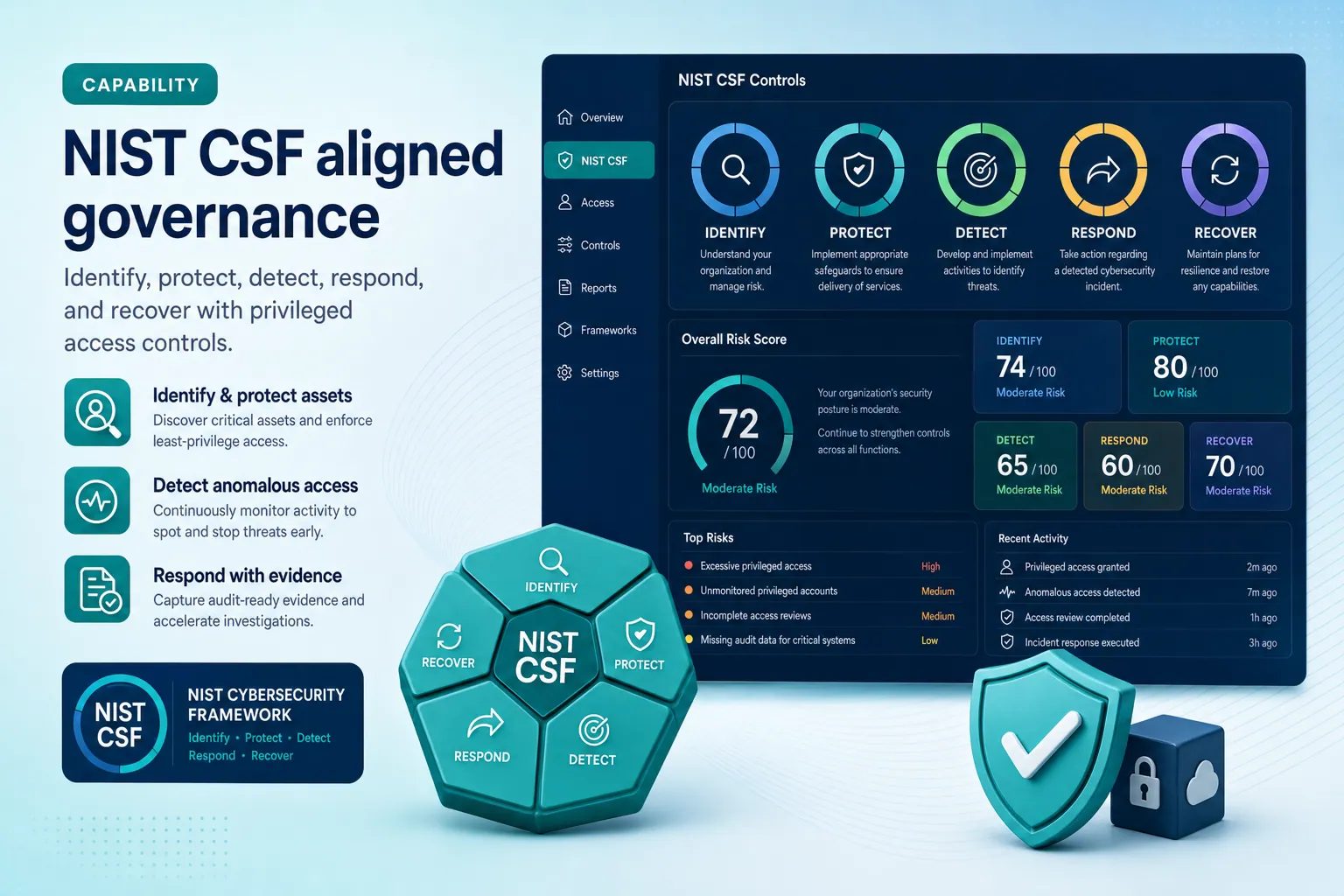
NIST CSF 2.0 organises cybersecurity outcomes into Govern, Identify, Protect, Detect, Respond and Recover. ZenXPAM seeds the framework and maps its privileged access controls to named subcategories such as PR.AA, scoring them continuously so the privileged access slice of your CSF profile stays current.
- Subcategory-level mapping across Govern, Identify, Protect, Detect, Respond and Recover
- Continuous automated checks with a CSF 2.0 score and drill-down
- Access certification campaigns feeding the identity and access outcomes
- Hash-chained audit supporting detection and response evidence
What is NIST CSF 2.0?
The NIST Cybersecurity Framework (CSF) is a voluntary framework developed by the National Institute of Standards and Technology to help organizations manage and reduce cybersecurity risk. It provides a set of industry standards and best practices to help organizations better understand, manage, and reduce their cybersecurity risk and protect their networks and data. The framework consists of five core functions: Identify, Protect, Detect, Respond, and Recover. These functions provide a high-level strategic view of the lifecycle of an organization's management of cybersecurity risk. The framework is designed to be flexible and adaptable, allowing organizations to implement it according to their specific needs, risk tolerance, and resources. It helps organizations align their cybersecurity activities with business requirements, risk tolerances, and resources.
Where is NIST CSF 2.0 applicable?
The NIST Cybersecurity Framework is applicable to organizations of all sizes and sectors, including private companies, government agencies, and non-profit organizations. While originally developed for critical infrastructure sectors, it has been widely adopted across various industries including finance, healthcare, energy, manufacturing, and technology. The framework is particularly valuable for organizations that need to improve their cybersecurity posture, align cybersecurity activities with business objectives, or communicate cybersecurity requirements to stakeholders. It's used by organizations that want to manage cybersecurity risk in a cost-effective way based on business needs, without placing additional regulatory requirements. Many government contractors and organizations working with federal agencies are encouraged or required to align with NIST frameworks. It's also valuable for organizations seeking to establish a comprehensive cybersecurity program or improve their existing security practices.
Features, benefits & risks
Key Features
- Subcategory-level mapping across Govern, Identify, Protect, Detect, Respond and Recover
- Continuous automated checks with a CSF 2.0 score and drill-down
- Access certification campaigns feeding the identity and access outcomes
- Hash-chained audit supporting detection and response evidence
- Signed evidence packs an assessor can verify offline
Benefits
- Keeps the privileged access portion of a CSF profile evidence-backed
- Turns target-profile gaps into tracked control exceptions
- Supports risk conversations with real control scores, not estimates
- Aligns operational PAM with a widely recognised outcome model
- Reusable evidence across the other seeded frameworks
Risks
- Cybersecurity attacks leading to data breaches and system compromises
- Inadequate threat detection resulting in delayed incident response
- Business disruption from cyber incidents affecting operations
- Loss of sensitive data and intellectual property
- Inability to meet government and enterprise security requirements