ZenXPAM for service providers

Multi-tenant privileged access for MSPs and MSSPs

Govern privileged access across every customer environment from one platform - with tenant isolation, vaulted credentials, agentless sessions, and audit evidence your customers can take to their next review.

Secure every customer estate without multiplying PAM stacks

MSPs and MSSPs are accountable for privileged access across many customers, many infrastructures, and many trust boundaries. Enterprise PAM built for a single company turns into shared credentials, weak isolation, and a high cost-to-serve - because most PAM products run one tenant, or one instance, per customer.

ZenXPAM is multi-tenant by design, and that is the structural difference. A single running deployment hosts many customer tenants, in any hosting model you choose - partner-hosted, customer-hosted or sovereign. Creating a tenant is a provisioning API call, not a new instance to stand up, patch, monitor and licence. Each customer gets its own identity context, vault boundary, audit trail and signed entitlement. Your engineers work from one cross-tenant console. Onboarding the next customer costs you a tenant record, not another PAM island.

ZenXPAM vendor and MSP privileged access with isolated jump-host sessions

Where single-enterprise PAM breaks for providers

  • One instance per customer to deploy, patch, monitor and licence
  • Weak tenant isolation and shared admin paths
  • VPN and standing vendor accounts that never get revoked
  • Passwords handed to contractors and field engineers
  • No clean way to prove who did what, in which customer, when
  • No software-enforced commercial ceiling per customer

What a provider-ready PAM must do

  • Serve many customer tenants from one deployment, in any hosting model
  • Enforce least privilege across all customers
  • Give internal engineers and external vendors access without credential reuse
  • Meet contractual and audit obligations with tenant-scoped evidence
  • Hold each customer to an enforced user, device and feature ceiling
  • Scale onboarding without standing up a new PAM island per customer

One deployment, many customer tenants

ZenXPAM was built multi-tenant rather than retrofitted. One running deployment hosts many customer tenants - and it does so in whichever hosting model the engagement needs: partner-hosted, customer-hosted, or in a sovereign datacentre. There is no feature-reduced edition that only works if someone else hosts it.

  • One deployment serves every customer tenant - no instance per logo to patch, monitor and licence
  • The same product in every hosting model: partner-hosted, customer-hosted, or sovereign
  • A platform Super Admin creates a tenant through the provisioning API or the platform console
  • On creation, ZenXPAM automatically seeds that tenant's full permission set and twelve default roles - Super Admin, Admin, Manager, User, Auditor, Approver, Security Admin, Security Operator, Compliance Officer, System Admin, Incident Responder and Read-Only
  • All role-permission mappings seed with them, and a first administrator can be created and walked through a setup wizard on first login
  • Tenant self-registration is supported where you want customers to start themselves
  • Onboarding a customer is a provisioning call against infrastructure you already run
A single ZenXPAM deployment hosting many customer tenants with a cross-tenant console

Signed per-tenant entitlements

Every tenant redeems a cryptographically signed subscription key. That key - not a spreadsheet and not a trust exercise - defines what the customer is entitled to, and the platform enforces it. You get hard commercial control per customer without separate deployments.

  • The signed key defines user, device and managed-resource ceilings, enabled feature modules, an installation binding and a validity window
  • Feature dependencies expand automatically, so an existing tenant never silently loses a capability on an upgrade
  • The lifecycle is explicit: NotYetValid, Active, Grace, ReadOnly, Blocked
  • Reads keep working through the restricted states - audit, evidence and emergency access stay available
  • A licence lapse degrades commercial scope; it does not break a security control in the middle of an incident
  • That is the answer to a customer security team asking what happens if the subscription expires during a breach
Cryptographically signed per-tenant subscription keys with a defined lifecycle

One cross-tenant platform console

The cross-tenant view is in the product, not a separate MSP console bolted over per-customer installations. Your platform administrators run the whole book of business from one place while each tenant stays scoped to its own data.

  • Platform dashboard across every tenant you host
  • Per-tenant overview with licence and subscription status at a glance
  • Tenant user management from the platform plane
  • Activate, deactivate, update and soft-delete a tenant
  • Tenant scope is enforced in the shared data layer - a tenant user cannot widen scope by passing another tenant's identifier
Cross-tenant platform console showing per-tenant licence status and user management

Tenant-aware discovery

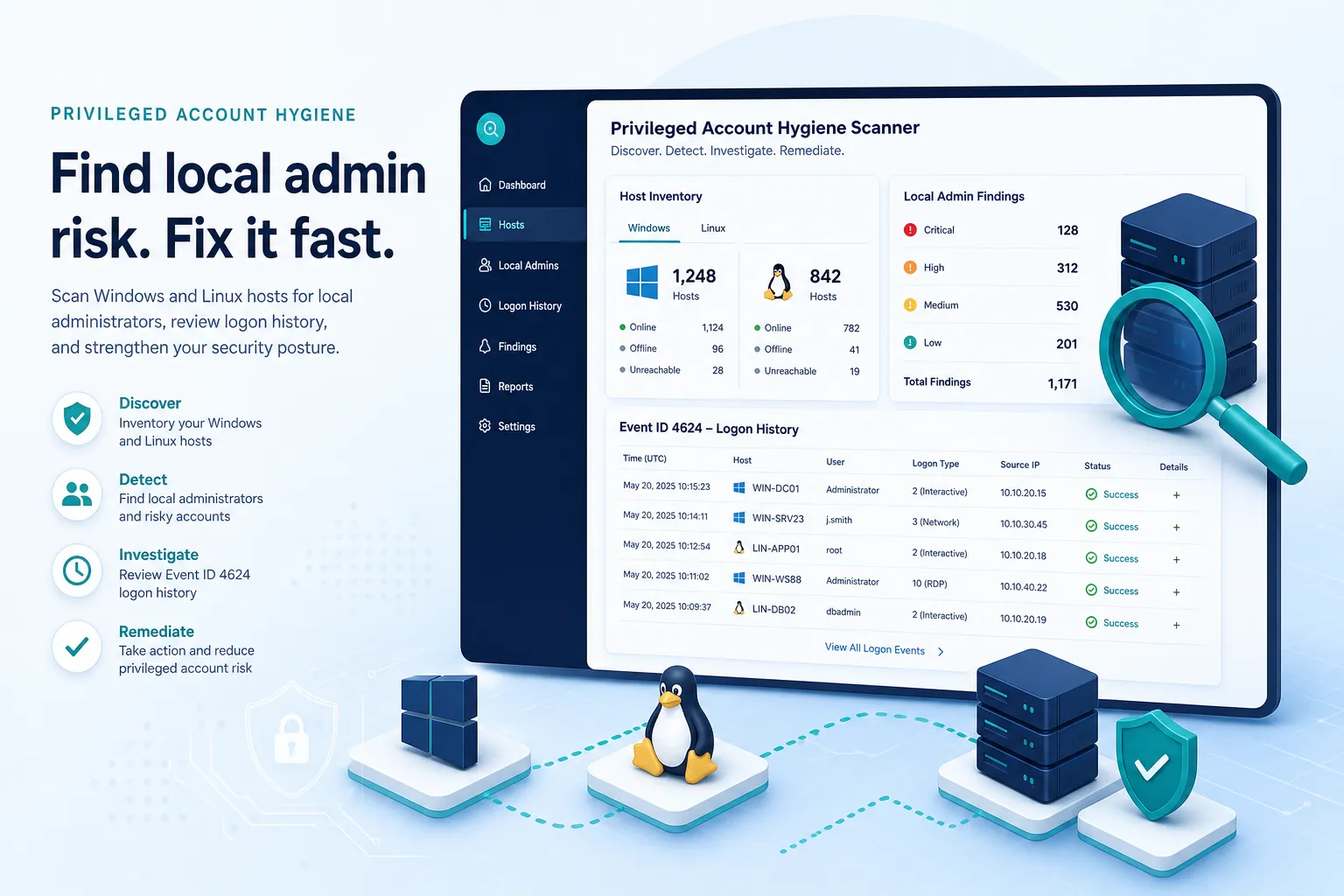
MSPs manage hundreds of customer environments, each with its own assets, credentials, and ownership. Discovery has to stay scoped - centralized oversight without cross-customer leakage.

  • Network and inventory scans run in the customer context you authorized
  • Directory-aware discovery against AD, Entra ID, and LDAP per tenant
  • Ungoverned, orphaned, and shared privileged accounts surface inside that tenant only
  • Assets map to the tenant that owns them before any access path is granted
Privileged account and asset discovery scoped per tenant

Multi-tenant identity and administration

Every API request carries a tenant context. There is no privileged session without a tenant, and no shared bleed-over between customer environments.

  • Dedicated tenant records with provisioning, subscription, and local admin setup
  • JWT tenant validation on authenticated APIs so requests cannot run without isolation
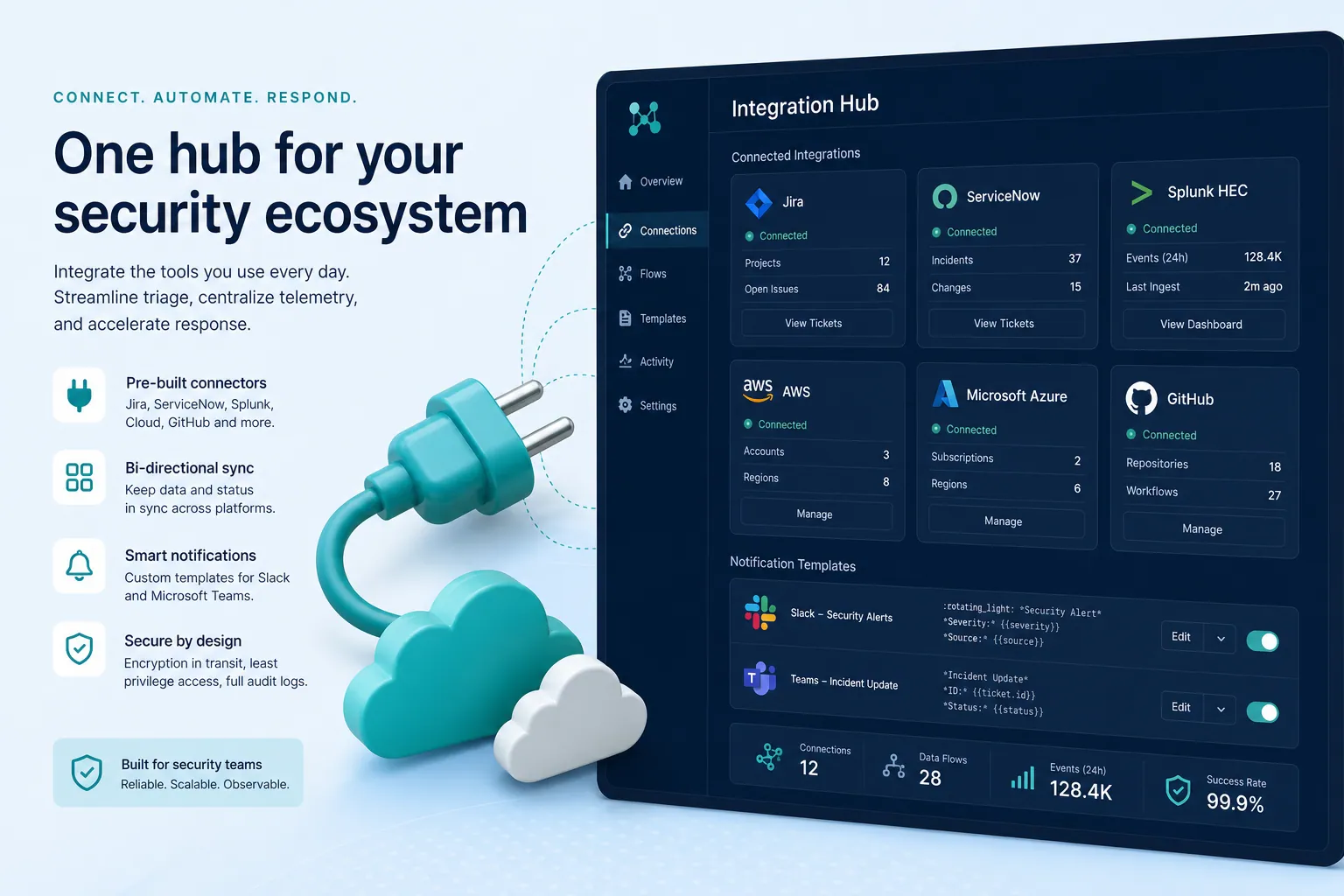
  • Per-tenant directory integration - Entra ID, Active Directory, SAML, and OIDC
  • Provider staff can be authorized across tenants without reusing customer passwords
  • Customer admins retain control of their own users, roles, and identity source
Per-tenant identity, provisioning, and administration

Policy-driven access across customers

Keep a provider-wide security baseline, then tighten per customer, role, or system type - without a script per engagement.

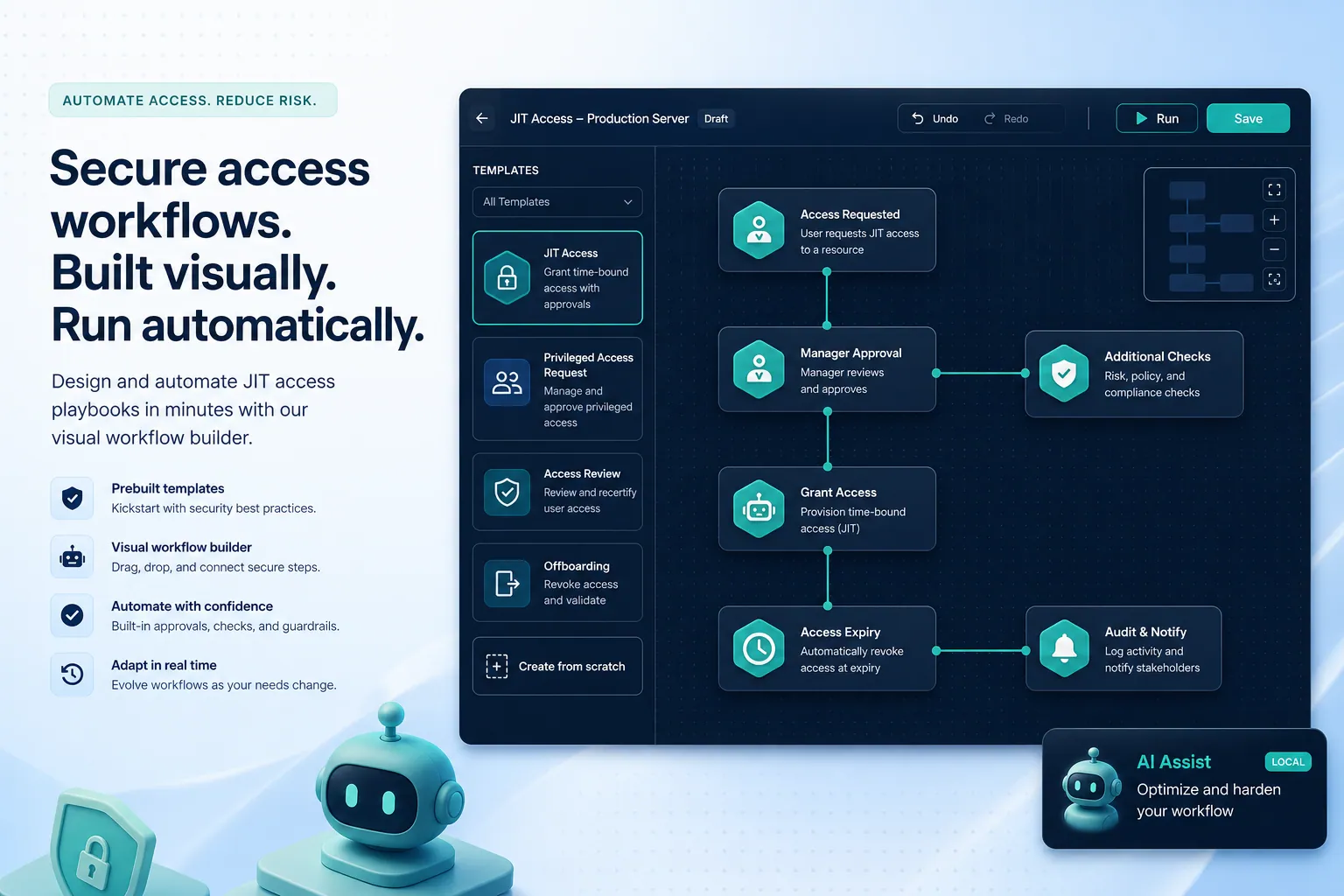
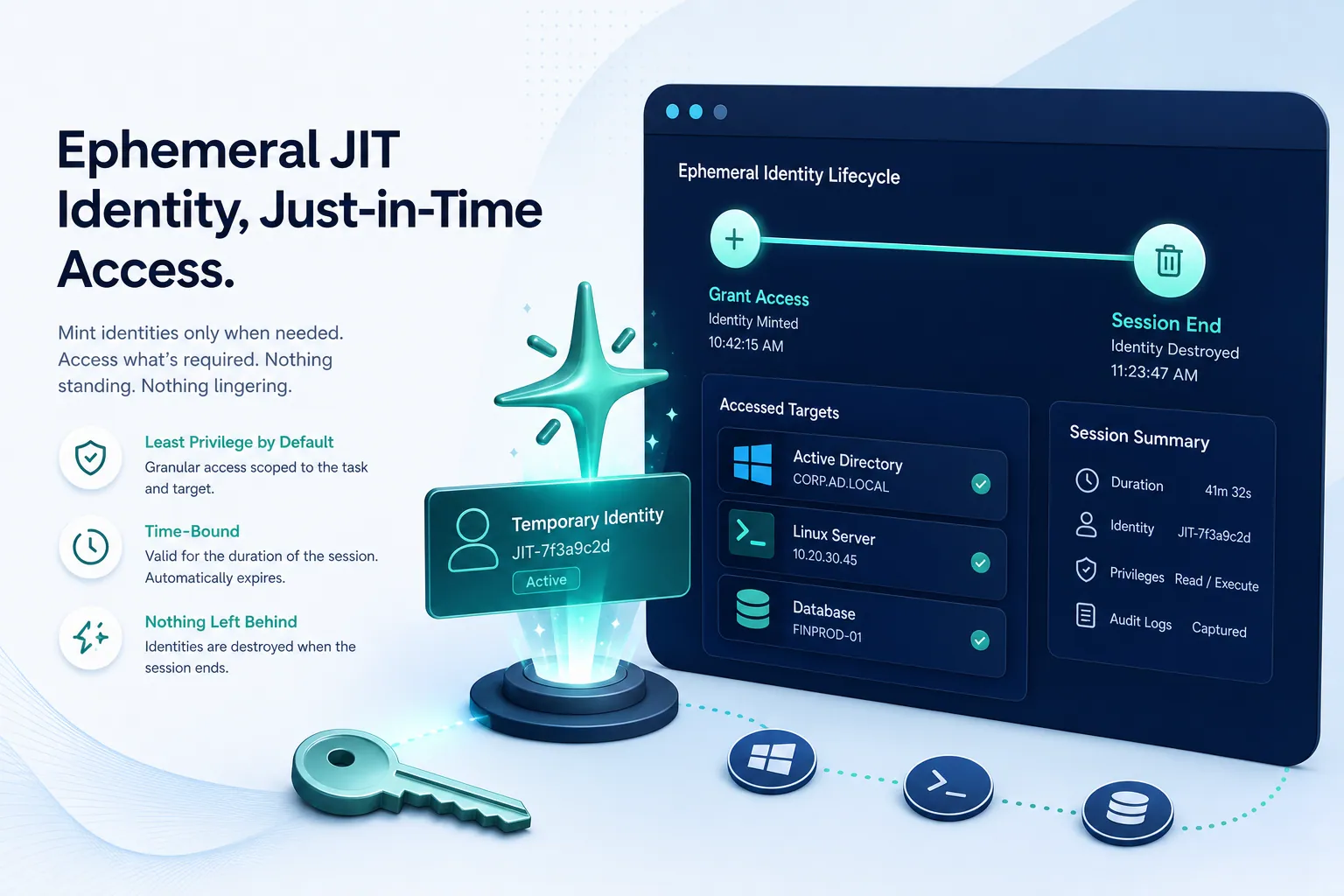
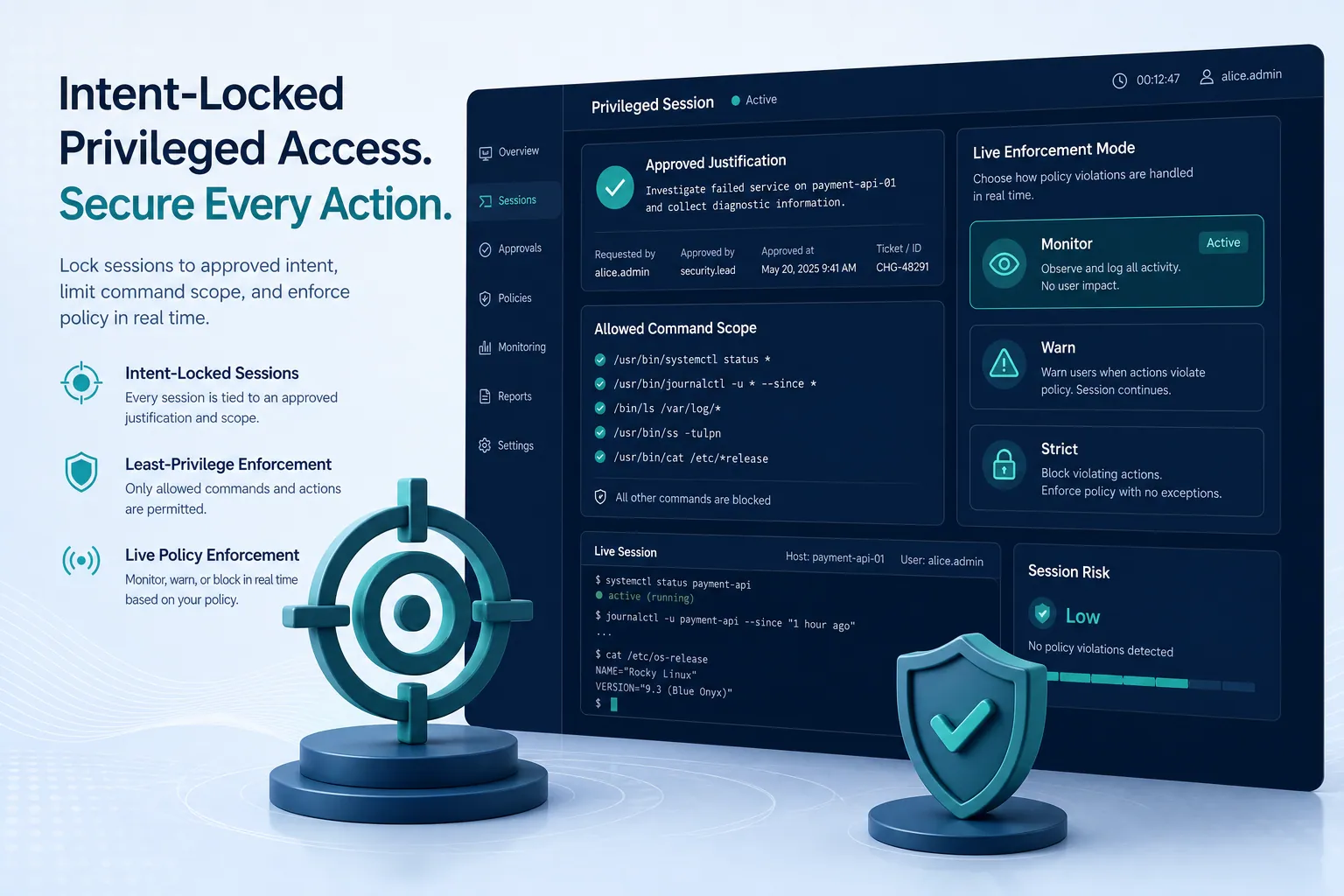
  • Just-in-time, time-boxed elevation instead of standing admin
  • Intent compiled into live session scope - Monitor, Warn, or Strict
  • Approval workflows and ITSM ticket checks before a privileged window opens
  • Ephemeral identities minted on grant and removed on expiry
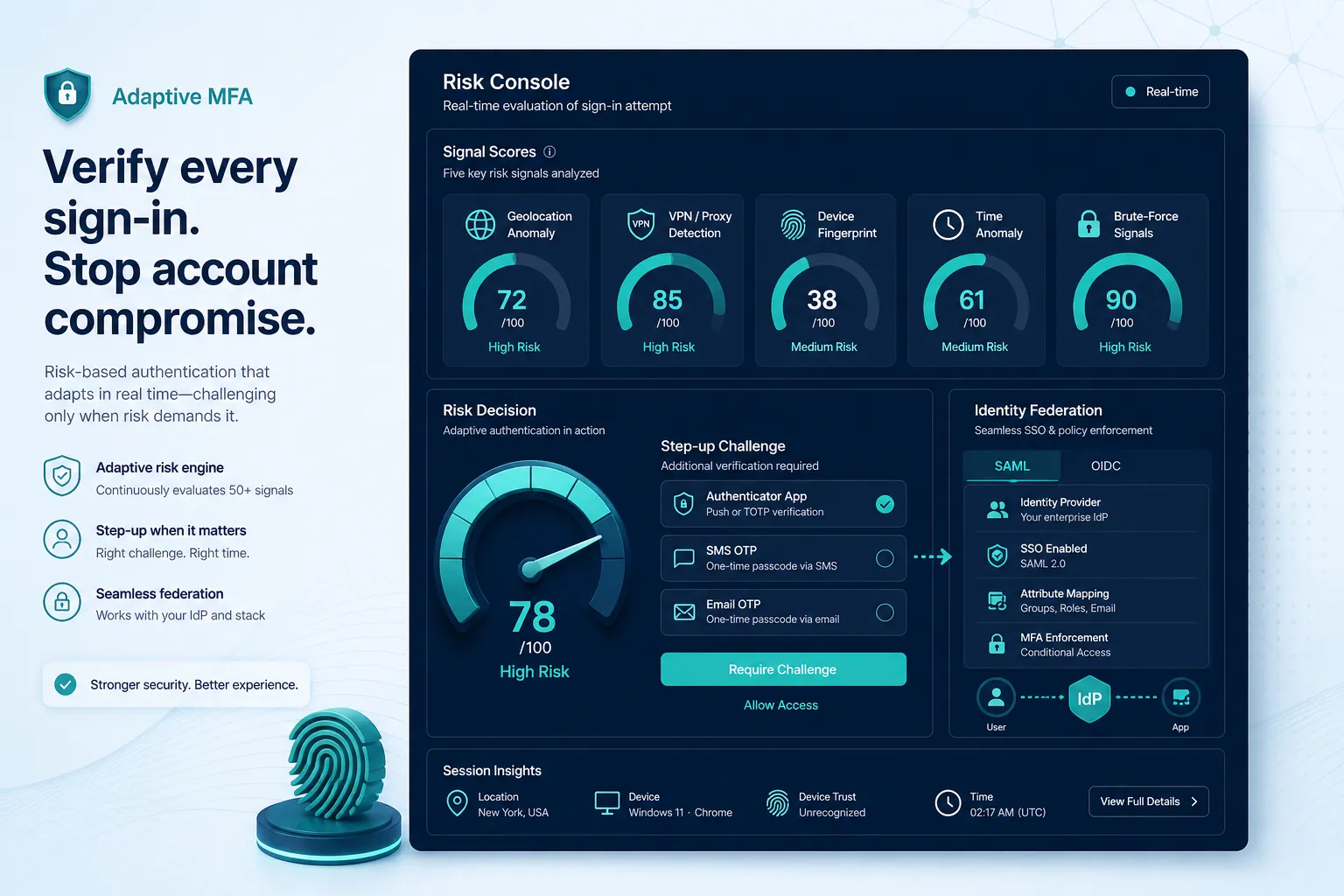
  • Step-up MFA and continuous risk scoring during the session, not only at login
Just-in-time privileged access policies across MSP tenants

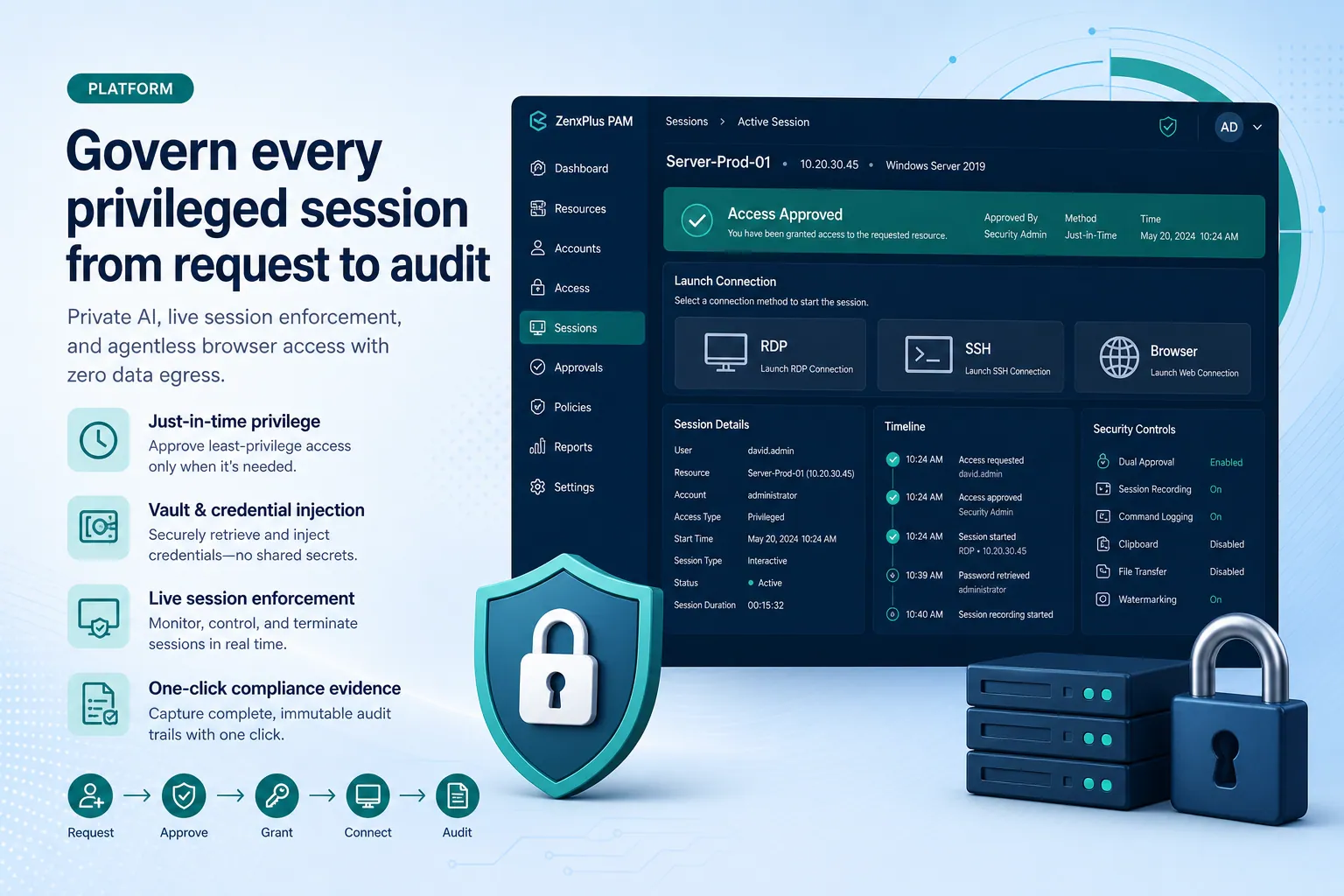
Secure remote access without shared VPNs

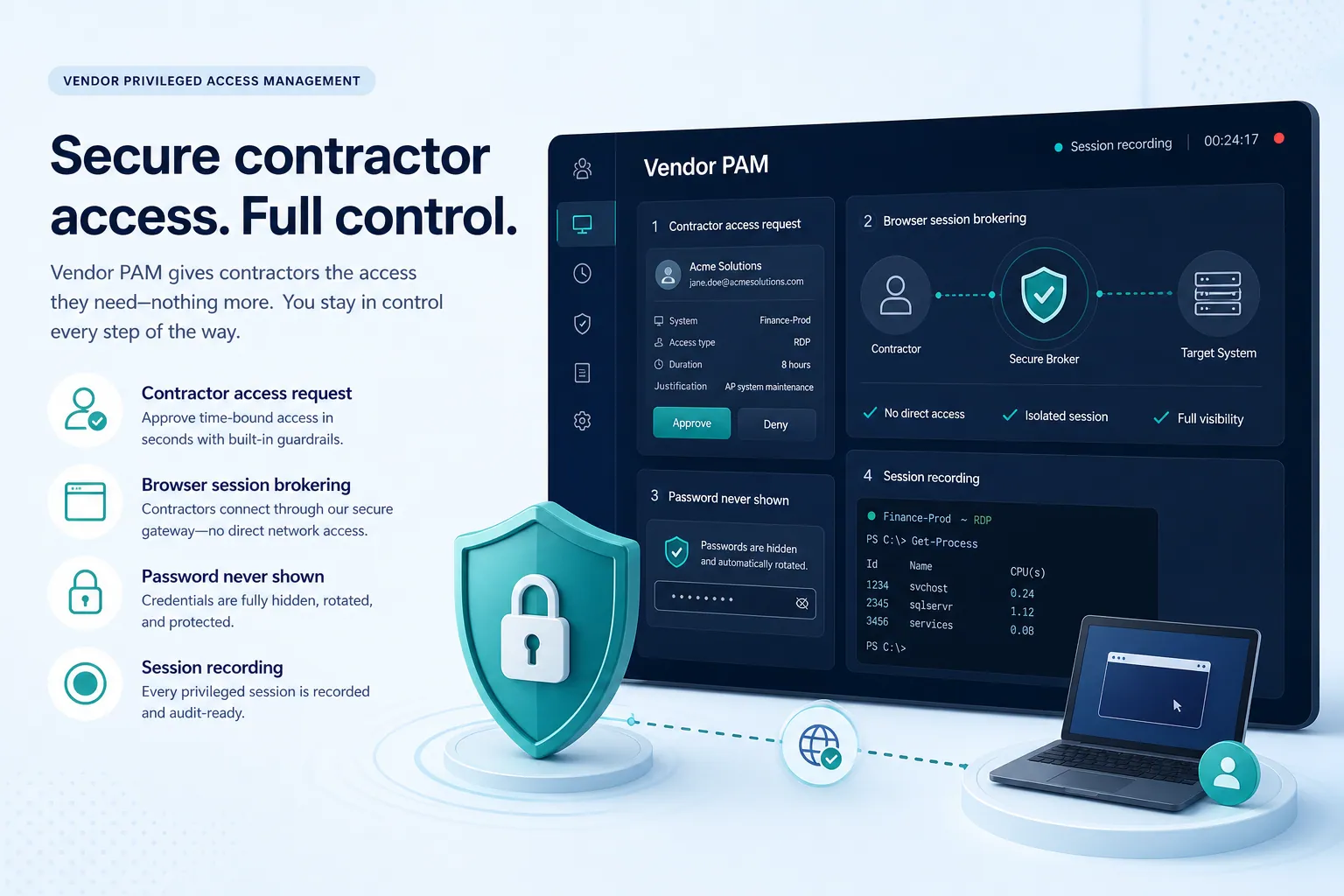
Engineers and vendors reach customer systems through the browser. Credentials stay vaulted. Traffic is brokered through isolated jump paths - not a shared VPN that every contractor keeps forever.

  • Clientless RDP, SSH, VNC, web apps, and consoles from the browser
  • Server-side credential injection - the operator never sees the password
  • Jump-server routing keeps vendor traffic isolated from the rest of the estate
  • Zenx Gateway / WebConnector brokering so you are not exposing management interfaces
  • Onboard a vendor in minutes, revoke the window the same way
Agentless browser access through Zenx Gateway and isolated jump hosts

One operator experience at scale

Users only see the tenants, systems, and access methods they are allowed to use. Guided launch replaces tribal knowledge and shared jump-host spreadsheets.

  • SSO into the PAM portal with the identity provider you already run
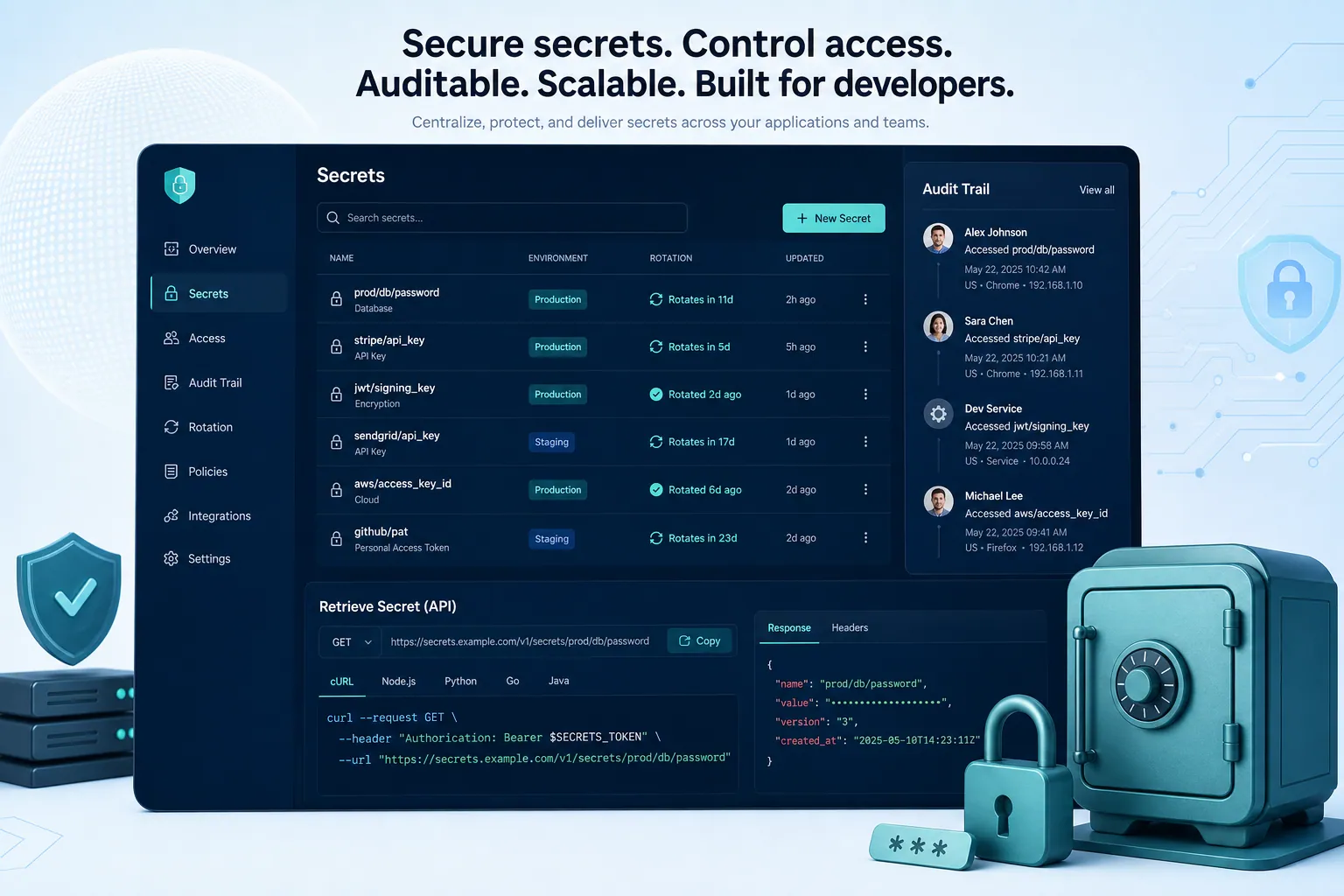
  • Request → approve → grant → connect → audit in one flow
  • Passwords and keys stay in ZenxVault; access is injected at session time
  • Automated rotation and lifecycle so checkout-and-forget stops being the model
ZenXPAM console for request, approve, grant, connect, and audit

Tenant-scoped audit and customer-ready evidence

Each tenant gets its own recordings, command trails, and exportable evidence. You still get provider-level visibility across the book of business.

  • Full session recording with searchable playback
  • Tamper-evident trails for who connected, to what, and for how long
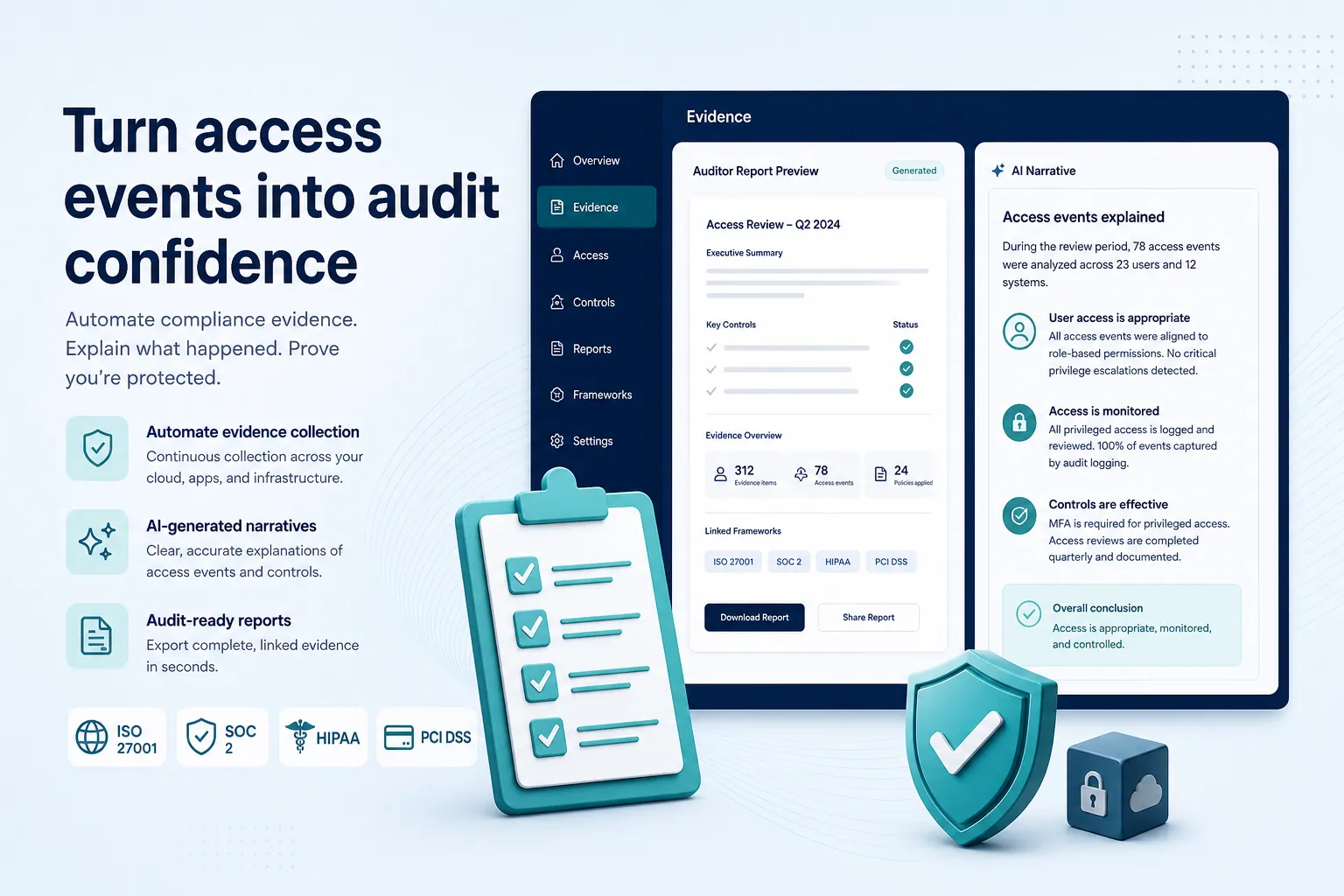
  • Evidence packs mapped clause by clause to eight seeded frameworks - SOC 2 Type II, SOX, ISO/IEC 27001:2022, HIPAA Security Rule, PCI DSS v4.0, GDPR, NIST CSF 2.0 and DORA
  • Packs carry per-file hashes under a signed manifest, with an offline verifier the customer's auditor can run without trusting your platform
  • Customer audits answered from the tenant they own - not a blended log dump
  • Platform dashboard for health and usage across tenants
Session recording and compliance evidence packs for MSP customers

Five ways partners sell managed PAM

The same platform supports several practice shapes. Most partners start with one and add the others as the book of business grows.

  • Managed PAM as a service - you host ZenXPAM and sell privileged access control as a subscription, onboarding tenants onto shared infrastructure you already run
  • Co-managed PAM - ZenXPAM runs in the customer's own environment and you hold the operator role for rotation, approvals and compliance reporting
  • Compliance-as-a-service - you run the certification campaigns and produce signed, framework-mapped evidence packs as a recurring audit deliverable
  • Third-party and vendor access control - you broker contractor and vendor access into customer estates with recording, intent-locked scope and time-boxed grants
  • OT and remote-site access - a hybrid deployment with the control plane central and the session plane in plant or branch segments
Managed PAM service models delivered by MSP and MSSP partners on ZenXPAM

What to know before you commit

Three things an MSP buyer will ask about, answered straight - because you would rather hear them from us than find them in a technical review.

  • Tenancy is enforced row-level scoping in a shared data layer. Where a customer's policy requires physical separation, we deploy a dedicated instance - the product is identical.
  • Every customer runs as its own tenant under one platform administration plane, with per-tenant users, policy and evidence.
  • Roles and permissions seed automatically when a tenant is created; platform, policy, compliance and workflow templates are applied through configuration as part of onboarding.
  • Tenant scoping is configuration-dependent at deployment. Setting the tenant-scope configuration is a signed-off step in every multi-tenant install we support.
Honest scope notes on ZenXPAM multi-tenancy for service providers

Why multi-tenant PAM matters for MSPs and MSSPs

Privileged access is no longer an internal control. It is a contractual promise and a trust differentiator. Deliver it as a service from one platform, without inflating infrastructure for every new logo.

One deployment, any hosting model

Many customer tenants on a single running deployment - partner-hosted, customer-hosted, or sovereign. Same product, no hosted-only edition.

Isolation by design

Tenant context is enforced in identity, vault, and the shared data layer - not bolted on after a shared install. Isolation is logical, not infrastructure-level; a dedicated instance is the answer where physical separation is required.

Commercial control per customer

A signed entitlement key per tenant sets user, device, resource and feature ceilings - and a lapse drops to read-only rather than cutting off audit, evidence or emergency access.

Scales with the book of business

Provision a tenant and ZenXPAM seeds the full permission set and twelve default roles automatically. Connect identity, discover assets, start governed sessions - no new PAM island.

Internal and third-party access

Your engineers and the customer’s vendors use the same governed path: JIT, injected secrets, recorded sessions.

Agentless delivery

Browser access and jump-host brokering - no thick client pack for every technician.

Audit-ready for the customer

Hand them their own evidence pack instead of reconstructing last quarter from tickets.

Local-first private AI

AI runs on local models inside your deployment, with a local provider enforced in production - for regulated customers who will not send session context to a public LLM.

MSP and MSSP questions

Deliver PAM as a managed service

See how one ZenXPAM deployment serves every customer tenant - signed entitlements, a cross-tenant console, and audit evidence per customer, without a new stack per engagement.