What Accuracy Metrics Matter for Enterprise Knowledge Assistants?
Every enterprise dashboard says the same thing: “Accuracy: 92%.”
Then auditors arrive. Confidence drops. Usage stalls. Trust breaks.
McKinsey reports employees lose 1.8 hours every day searching for information, which drains close to 20% productivity. That gap exists because most teams measure the wrong thing. This guide explains enterprise knowledge assistant accuracy, what 85–90% accuracy really means, and the 7 metrics that separate lab demos from production truth.
Forget Lab Metrics. Enterprises Track Business Results
F1 scores look impressive in research papers. However, they collapse during audits, compliance checks, and executive reviews. Here’s why that fails.
F1 blends precision and recall on static datasets. Enterprises work with live data, shifting policies, and role-based access. Accuracy without context becomes noise.
Real teams aim for 85–90% task accuracy. That benchmark comes from enterprise deployments, not Kaggle contests. At this level, assistants reduce tickets, shorten resolution time, and earn user trust.
Now here’s the shift most leaders miss. Resolution Rate beats raw accuracy for ROI.
A model can answer correctly yet still fail the task. For example, an answer may be accurate but lack the right document, citation, or next step.
Teams tracking the wrong metrics waste ₹50L or more each year on rework, escalations, and shadow searches. Real enterprises measure what closes tickets, not what flatters models.
The 7 Metrics That Actually Matter
1. Faithfulness (Target: 95%+)

Definition
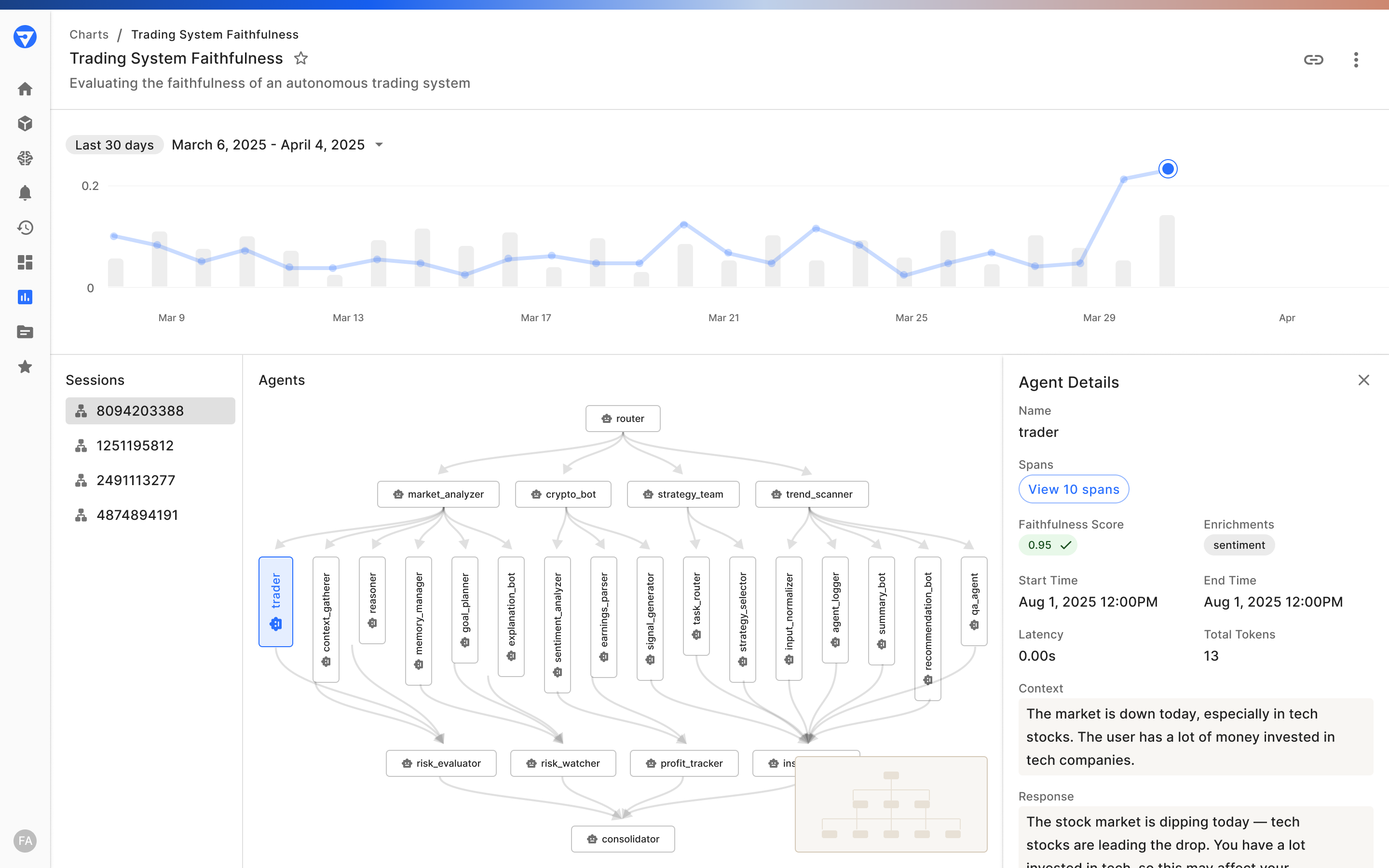
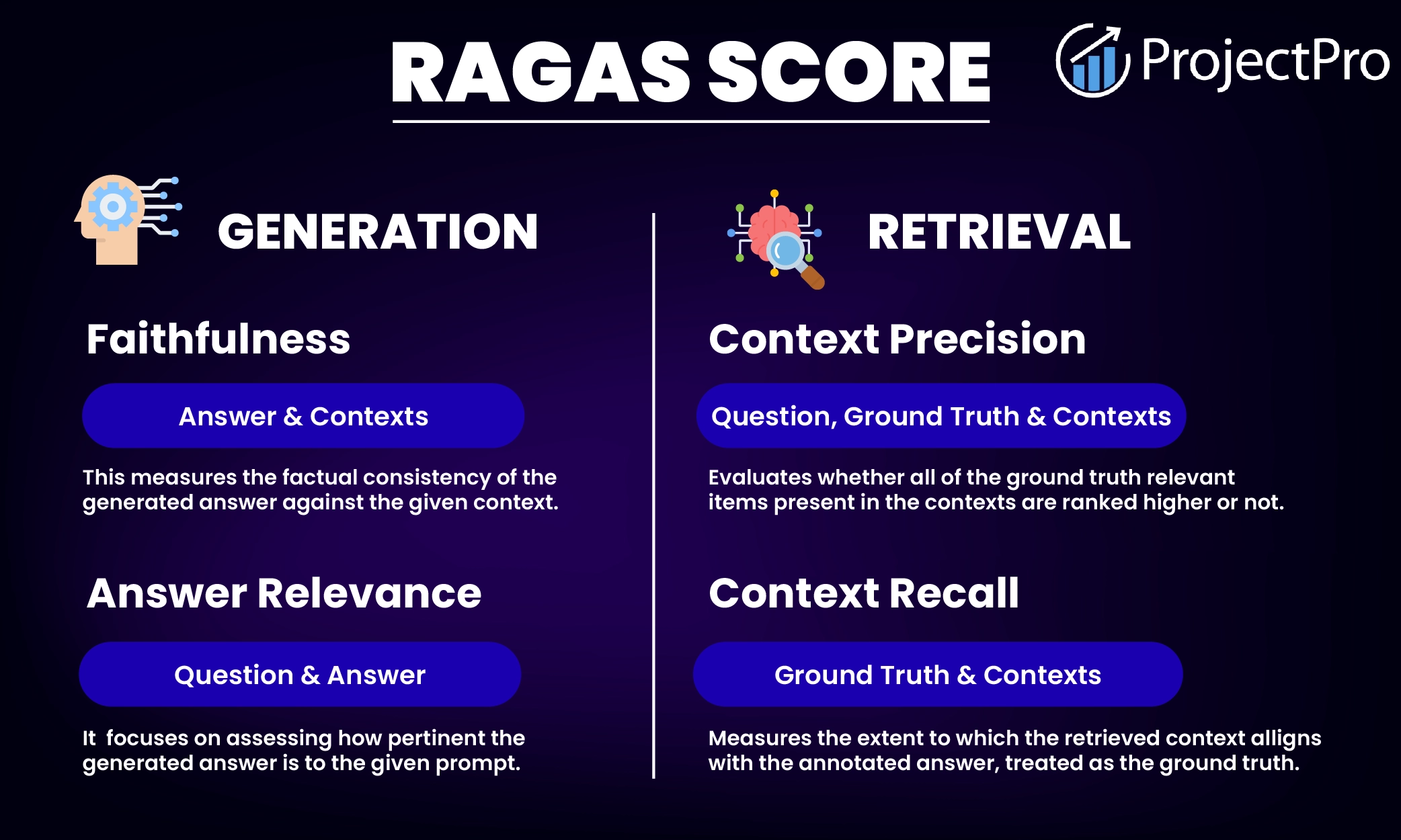
Faithfulness measures whether responses strictly align with retrieved enterprise sources. The answer must say only what the data says.
Enterprise Benchmark
95% or higher.
Why It Matters
Faithfulness is trust. In BFSI and manufacturing, one unfaithful answer can trigger compliance risk. During one deployment, this metric always breaks first when content pipelines drift.
Dashboard Prompt
Show retrieved chunks vs generated answer. Highlight unsupported claims in red.
2. Hit Rate / Recall@K (Target: 90%+)


Definition
Hit Rate checks whether the correct document appears in the top K results.
Enterprise Benchmark
90% or higher at K=5.
Why It Matters
If retrieval fails, generation becomes guesswork. After RAG tuning, enterprises often see precision jump from 0.69 to 0.92. Watch this metric skyrocket when indexing and chunking improve.
Dashboard Prompt
Top queries with missed hits. Track by department and role.
3. Hallucination Rate (Target: <5%)


Definition
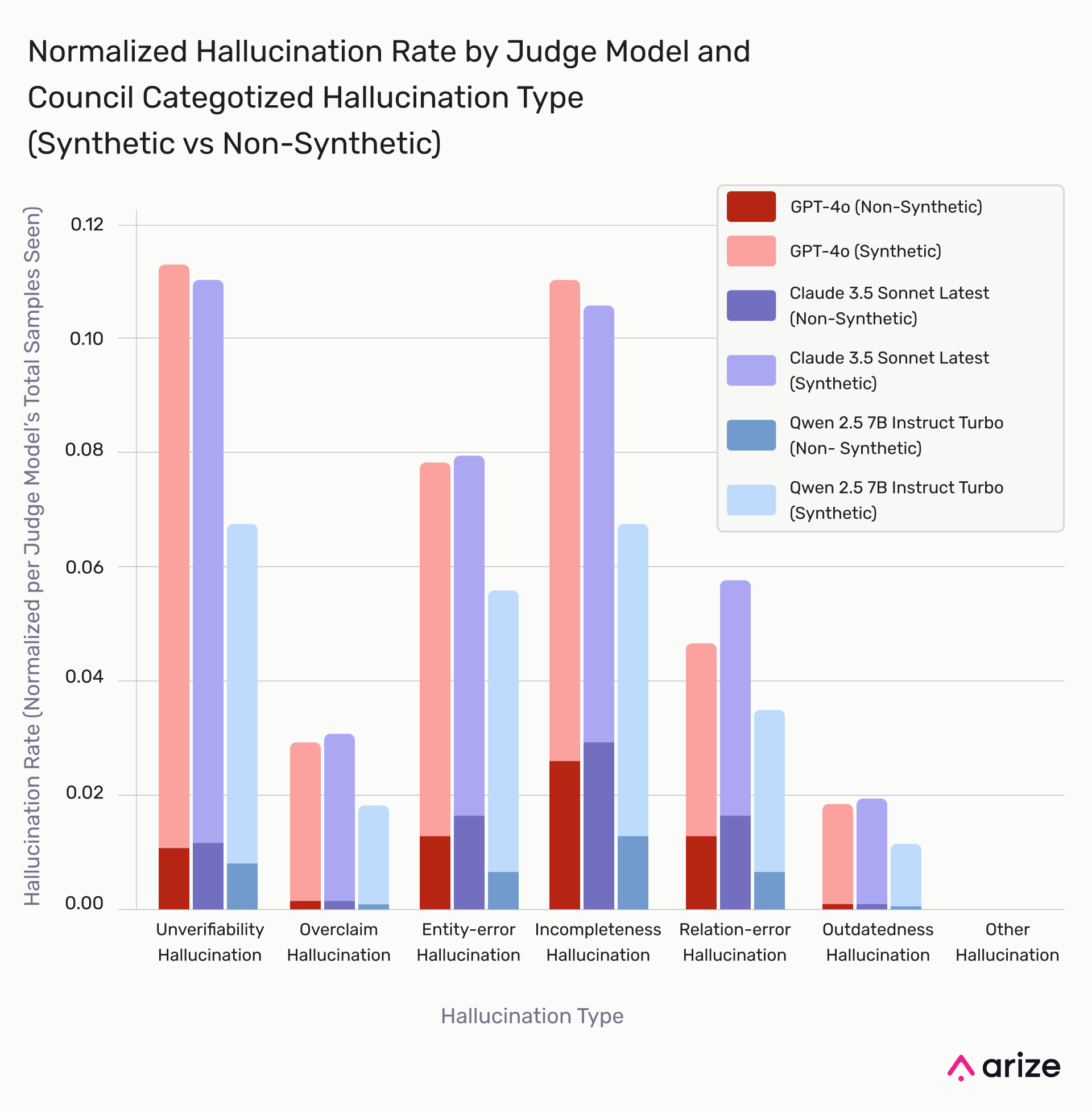
The percentage of answers containing unsupported or fabricated claims.
Enterprise Benchmark
Below 5%.
Why It Matters
Hallucinations destroy credibility faster than wrong answers. Enterprises detect them through citation gaps, contradiction checks, and human review loops.
Dashboard Prompt
Weekly hallucination trend with alert thresholds.
4. Resolution Rate (Target: 70–85%)


Definition
The percentage of queries resolved without human escalation.
Enterprise Benchmark
70–85%.
Why It Matters
This is the ROI metric. F1 scores? Lab toys. Enterprises track Resolution Rate. It shows cost savings, not model vanity.
Dashboard Prompt
Resolved vs escalated queries by intent type.
Zenxsys Enterprise Knowledge Assistant (ZenXEKA)
Zenxsys ZenXEKA is a production-ready, AI-powered platform that enables organizations to retrieve accurate answers from internal documents, policies, and knowledge bases through text queries, with multilingual support planned for future releases. Built on a Retrieval-Augmented Generation (RAG) architecture, ZenXEKA generates responses only after identifying relevant, approved source content, reducing hallucination risk and improving trust.
5. Mean Reciprocal Rank (MRR > 0.8)


Definition
MRR measures how high the correct answer ranks.
Enterprise Benchmark
Above 0.8.
Why It Matters
Users trust answers that appear first. Even accurate results lose impact if buried. This metric exposes ranking decay early.
Dashboard Prompt
MRR by query cluster and data source.
6. Citation Accuracy (Target: 92%+)


Definition
The percentage of citations that correctly support the answer.
Enterprise Benchmark
92% or higher.
Why It Matters
Citations enable audits, reviews, and learning. In regulated industries, this metric protects leaders during compliance reviews.
Dashboard Prompt
Clickable citation validation with mismatch flags.
7. First-Time Fix Rate (Target: 65%+)


Definition
The share of issues solved on the first interaction.
Enterprise Benchmark
65% or higher.
Why It Matters
This metric links accuracy to experience. When it drops, users lose patience and revert to manual search.
Dashboard Prompt
First-touch resolution by channel and persona.
How Real Teams Build These Dashboards
High-performing teams start with ground truth datasets curated by SMEs. They label correct answers, acceptable variants, and failure cases.
Next comes human evaluation protocols. Weekly reviews catch drift early. Enterprises also run A/B tests between retrieval strategies, not just models.
Most important, dashboards stay role-aware. RBAC and PII filtering ensure metrics reflect what users are allowed to see, not what models can access.
Conclusion: Track These 3 First
Start simple. Faithfulness, Hit Rate, and Resolution Rate form the trust triangle.
Get these right, and everything else improves.
Ignore vanity metrics. Focus on outcomes.
That’s how enterprise knowledge assistants earn trust at scale.
FAQs: Enterprise Knowledge Assistant Accuracy
1. What accuracy level is acceptable for enterprise knowledge assistants?
Enterprises expect 85–90% task accuracy measured in real workflows, not offline lab tests.
2. Why doesn’t high accuracy guarantee business impact?
Because accuracy measures correctness, while Resolution Rate measures task completion and cost reduction.
3. How do enterprises reduce hallucinations in production?
By enforcing RAG retrieval, citation validation, and faithfulness scoring on every response.
4. Which accuracy metric matters most at scale?
Faithfulness, because ungrounded answers break trust, compliance, and adoption.
5. How often should ZenXEKA accuracy be reviewed?
Weekly, and after every major content, policy, or model update.